



Which SUV offers better real-world AWD confidence for Franklin, WI drivers?
Russ Darrow Mazda of Milwaukee – Which SUV offers better real-world AWD confidence for Franklin, WI drivers?
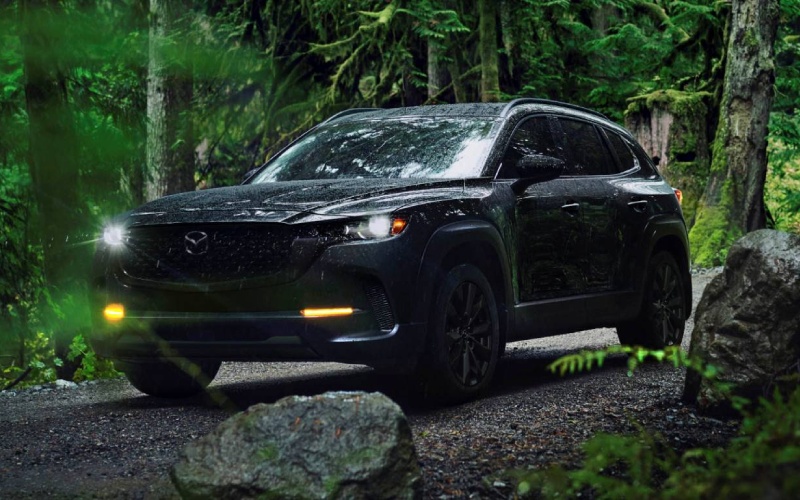
It’s one of the most common questions we hear from SUV shoppers: which compact SUV puts more confidence at the driver’s fingertips when conditions get slippery or unpredictable around Franklin, WI? Comparing Mazda’s i-ACTIV AWD® in the CX-50 with Hyundai’s available HTRAC AWD in the Tucson reveals two capable systems that approach traction differently. The short answer is that both can help in challenging conditions, but CX-50’s standard i-ACTIV AWD® across the lineup, its proactive torque distribution, and the way it integrates with Mazda Intelligent Drive Select (Mi-Drive) tend to make the vehicle feel more settled and intuitive when roads get rough or traction varies corner-to-corner.
Let’s unpack how these systems think and respond so you can decide what fits your daily driving. Mazda’s i-ACTIV AWD® continuously monitors inputs such as wheel speeds, steering angle, and driver demand, and it anticipates rather than reacts. That means it’s already poised to apportion torque to the rear axle before a wheel slips, which helps maintain momentum and steering precision. Pair this with Mi-Drive modes—Normal for balanced response, Sport for livelier throttle and shift mapping, and Off-Road for low-friction surfaces—and CX-50 makes the most of available grip without the driver needing to micromanage. On turbo models properly equipped with a Mazda tow hitch, Towing mode fine-tunes power delivery and shift schedules for stability with a trailer attached. The result is an SUV that feels composed, predictable, and confidence-inspiring across backroads, gravel pull-offs, and pitted urban streets alike.
Hyundai’s HTRAC AWD, offered on Tucson models, does a good job distributing power front-to-rear to enhance stability and traction, and its Drive Mode Select adds a Snow mode on AWD-equipped versions to help in low-grip situations. For many drivers, that will be enough. However, because Tucson makes AWD optional, shoppers must ensure they select the right configuration to benefit. And while it provides a commendable footing in everyday inclement conditions, HTRAC’s tuning is generally aimed at smooth confidence versus the taut, driver-connected feel that characterizes Mazda’s approach.
Where the systems become most distinct is when grip levels change rapidly—think slush after a thaw, wet leaves on residential streets, or a dirt shoulder edging a paved road. CX-50’s G-Vectoring Control Plus, working alongside i-ACTIV AWD®, subtly manages engine torque and applies light braking to increase tire loading on turn-in, which helps the SUV settle into a corner cleanly. This cooperation between chassis, powertrain, and AWD can reduce the tiny corrections drivers often make mid-corner, leading to a calmer, more controlled steering feel. Tucson is confident and secure, but it doesn’t layer in the same predictive, driver-focused dynamics.
The other angle to consider is how AWD interacts with the rest of the SUV’s capability envelope. CX-50 backs up its traction story with meaningful hardware and software: available all-terrain tires on Meridian Editions, up to 3,500 pounds of towing when properly equipped on turbo models, and available features like an Adaptive Front-lighting System and a windshield-projected Active Driving Display that support visibility and focus. Tucson offers useful conveniences—like available Remote Smart Parking Assist on Limited and excellent camera tech—but its gas models top out below CX-50’s tow rating, which matters if you plan to haul a small camper or pair of snowmobiles.
Inside, both SUVs connect your life effortlessly. CX-50 features a 10.25-inch full-color display with touch functionality, wireless Apple CarPlay and Android Auto, Alexa Built-in, and a wireless charger. Tucson counters with a standard 12.3-inch touchscreen, Bluelink+, available panoramic curved display, and modern conveniences including a hands-free smart liftgate on select trims. While Tucson’s screens make a strong visual first impression, many shoppers prefer CX-50’s thoughtfully placed controls and physical-tactile approach on the move. It’s a difference you feel after a day with each vehicle.
To help you narrow the choice, here are practical checkpoints to weigh, especially if AWD confidence is top-of-list:
- AWD philosophy: Proactive, always-on i-ACTIV AWD® standard in CX-50 vs. available HTRAC AWD in Tucson.
- Drive modes: Mi-Drive with Off-Road and available Towing in CX-50 vs. Tucson’s Drive Mode Select with Snow on AWD models.
- Real-world support: Available all-terrain tires, robust towing on turbo CX-50, plus visibility aids like Adaptive Front-lighting System.
If you’re the kind of driver who values connected steering, calm body control, and the reassurance that your SUV is already equipped for changing conditions, CX-50’s tuning often feels like the more natural fit. And because AWD is standard, you don’t have to climb the trim ladder to get the confidence you want.
For shoppers comparing electrified options, the CX-50 Hybrid brings 219 combined horsepower with standard eAWD and Trail and Power drive modes. Tucson offers both a hybrid and a plug-in hybrid; these are fine choices for maximizing fuel-sipping commutes. Still, if the heart of your question revolves around “how does this SUV feel when the weather and pavement aren’t cooperating?”, Mazda’s cohesive calibration across steering, suspension, transmission, and AWD remains the differentiator.
Ultimately, the best way to answer your AWD question is with a back-to-back evaluation on the same day and routes you drive most. You’ll feel how the CX-50 rotates into a corner and pulls away with composure, how it puts power down out of a patchy intersection, and how the cabin’s focused ergonomics reduce the need to look away from the road. One test drive tends to make the case plainly.
Ready to try it? Russ Darrow Mazda of Milwaukee can set up a route that mixes surface streets, highways, and a few imperfect stretches so you can experience the difference in context. Our team is serving Greenfield, Oak Creek, and Franklin and will help you compare features, trims, and the nuances that matter to you long after the brochure gloss wears off.
Frequently Asked Questions:
Is AWD standard on the Mazda CX-50 and optional on the Hyundai Tucson?
Yes. Every CX-50 includes i-ACTIV AWD® as standard. Tucson’s HTRAC AWD is available by trim and configuration.
Do both SUVs offer dedicated drive modes for challenging conditions?
Yes. CX-50’s Mi-Drive includes Normal, Sport, and Off-Road, plus Towing on properly equipped turbo models. Tucson’s Drive Mode Select includes Snow on AWD-equipped trims.
Which SUV tows more with a gas engine?
When properly equipped, CX-50 turbo models tow up to 3,500 pounds. Tucson gas models list up to 2,750 pounds with trailer brakes.
Are there factory all-terrain tires available?
Yes for CX-50 on Meridian Editions. Tucson’s XRT focuses on rugged styling; all-terrain tires are not listed as a factory package.
0 comment(s) so far on Which SUV offers better real-world AWD confidence for Franklin, WI drivers?